

Google Wifi Priority Device Not Working
This is a common problem for users on congested dwelling house networks, where we notice our gaming or streaming specially interrupted because the network is decorated, with lots of devices connecting at once. Is at that place a way to prioritize one specific device above all others to try and stop this happening?
Fortunately, there is a setting available on some routers called Quality of Service or QoS, which is designed specifically for this purpose – to set priority for devices and manage congestion on busy domicile networks, to ensure critical devices practise not take their traffic and user experience and so badly interrupted or affected past other devices on the network.
Here are the very quick steps for setting QoS:
- Find the MAC address of your device.
- Log into your router (type 192.168.0.1 or 192.168.1.1 into any browser)
- Enter the router admin/password
- Observe QoS Settings if they are bachelor
- Select your device using it's MAC address
- Set the priority to Highest or Maximum.
- QoS is not available on all routers.
For anyone not familiar with technology, don't worry, we'll run through a step by step procedure of how to do it. You but need to observe your device'south MAC accost, go into your router and prioritize your device in QoS settings (if available).
Allow's run through each stride in more detail.
Step #ane – Find the MAC Address of Your Device
This can actually exist the trickiest step, as every device has a slightly different bill of fare organization. But usually with a bit of searching, you can find the MAC Address of a device from inside the Connexion Settings/Status menus.
See this useful guide for finding the MAC address of all major devices; nosotros'll list some of the more mutual ones below:
1. Windows vii – Get to Command Panel.…Network & Sharing/Network & Internet.….Alter adapter settings. Correct click on the connexion (Wi-Fi or ethernet) currently in use, and click Status. Then click Details, and a list of settings, including the MAC Address, should come up to annotation down.
2. Windows 10 – If on Wi-Fi, click the Wi-Fi symbol in the bottom right, then click Network Settings. On the Settings screen that comes upwardly, click Properties, and a list of settings, including the Physical MAC Address, should come. If on ethernet, go to Settings…..Network & Internet…..Ethernet. Click on your current connection, then click Backdrop, and the same list should appear to note down.
3. iPhones/iPad– Go to Settings….General….About. The MAC address is listed further down as the "Wi-Fi Address"
four. Android – Can very a little betwixt devices, just in general: pull downwards from the top of the screen, tap the Gear icon and then tap the Settings app to open up information technology. Become to Wireless & Networks and tap Wi-Fi, then tap the carte push and then tap Advanced. The MAC address is displayed at the lesser.
5. macOS – Open up the Apple menu, go to Organization Preferences…..Network. Select your connection, so click Advanced. The MAC address is displayed on the Hardware tab.
half-dozen. Games Consoles (PS4/PS5/Xbox 1/Xbox X) – Get to Settings…..Network……View Connectedness Condition/Connection Settings. As well encounter our article on setting up QoS for the PS4/PS5.
Run into the linked article above for finding the MAC for more than specialized devices that aren't listed here.
Once you've plant the MAC address, simply note it down, as you'll need information technology to set the priority for that device on the router.
Step #2 – Log Into Your Router
This is the scrap that intimidates some non-technical users, but it's really not that difficult. You lot tin log into your router from whatsoever device with an internet browser with a few unproblematic details that are always on the back of the router itself.
Check your router for a sticker with login details; it'll look something like this:
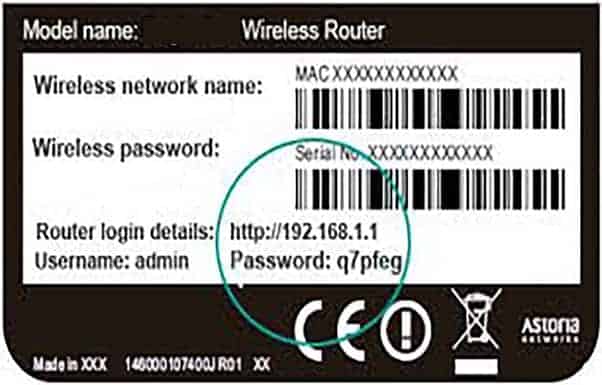
Note down the Login IP, Username and Password, the go to whatsoever device with a browser and practice the following:
- Log in to your router. This normally means typing in a specific IP address into a browser accost bar; it is frequently 192.168.0.1, 192.168.one.1 or 192.168.ane.254 or may be something different. If you don't know it, it volition be on the back of your router somewhere along with the login admin/ countersign, or Google it.
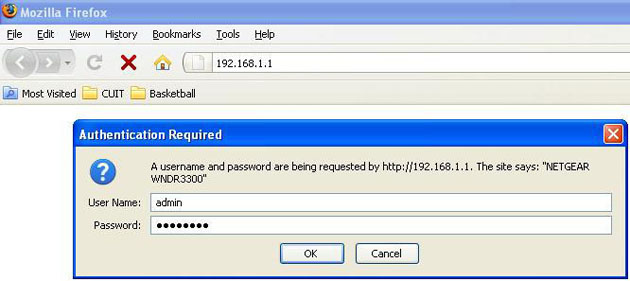
- Type in the admin and countersign – again volition be on the router somewhere or online.
- See here for our full help guide if you're struggling to admission your router settings page.
- If someone has changed these and so you'll need to go the details off them or do a full manufacturing plant reset of your router to reset all logins to default.
Step #three Observe & Configure QoS Settings
Once you lot're into your router, y'all need to discover Quality of Service or QoS settings if they're available (unfortunately some routers don't take it). It'southward usually but on a side menu on it's own as QoS, or it may be under a Network, LAN, Devices or Advanced tab or something similar. Different routers have unlike interfaces then yous might accept to search effectually the menus a bit.
See the example beneath of a router menu page – the QoS setting is on it'south own right at the lesser, but it will differ with each router.

Once y'all've found QoS it'due south only a matter of setting your device to take the highest or maximum priority. Then relieve settings and go out the router. On most routers, the connected devices should all exist listed, and you but need to select your device by it's MAC accost you noted downwardly earlier.
There volition usually then be an selection to set the Priority of the device, usually in a driblet downward box. Set up your device to Highest or Maximum priority, and fix all other devices to a lower priority, to prioritize your device on the network. On other routers, y'all may have to actually enter the MAC accost and gear up the priority manually (there might be an Add/Add together Device option in the QoS carte). Again different routers accept different ways of handling this setting, merely it'due south not likewise hard to configure information technology once you've found it.
How QoS Works
Once configured, this means that the router will handle traffic flow to and from your device starting time, earlier all other devices. This tin assistance with network congestion, although if bandwidth usage is loftier, it may negatively affect other user'south feel on their devices. It is a setting specifically designed manage traffic and fix priority for different devices on a network.
The normal priority for QoS for devices on a standard home network runs equally follows:
- Gaming – Games consoles don't tend to use much bandwidth for online gaming, but they do demand Maximum priority on busy abode network to proceed ping or latency low. Then it's usually games consoles that are prioritized using QoS; come across our article on this.
- Videocalls/Webinars – Skype, Zoom etc. Can be High or Maximum priority, especially if being used for work purposes.
- Streaming – Less latency sensitive, but uses much more than bandwidth, so does need a medium to high priority to prevent buffering on decorated networks, especially when streaming in Hard disk.
- General Browsing – Electronic mail, Social Media, general site browsing. Usually lesser of the list with the lowest priority, just because a slight delay in loading pages doesn't affect the experience as much as with gaming/streaming.
Of course, using QoS, a user tin can override this and give their device any priority they want, putting streaming devices to Maximum and everything else lower. It merely depends on which device(due south) seem to get most affected when the network is busy, and give them more priority to effort and lessen these bug.
What If My Router Does Not Have QoS?
Nosotros recognize that not all routers have QoS available to prioritize device traffic, and so what options are available in these cases?
We tin call up of a few other solutions to this problem:
Solution #one – Wired Connections – The outset priority for any disquisitional device that needs priority should be to get off Wi-Fi and onto a wired ethernet connection instead. Ethernet connections are much better than Wi-Fi, since they are a dedicated, united nations-congested communication channel to the router, whereas devices on Wi-Fi have to share the space with other wireless devices, leading to congestion and lag/buffering issues.
If you lot can get onto a wired connection, and then your congestion problems should automatically reduce, even on busy home networks.
Click here to view some long ethernet cables on Amazon.
Solution #2 – Powerline Adapters – If you cannot get easily go onto a direct wired ethernet connection because you are as well far away from the router, and then a Powerline Adapter is a next all-time solution for critical devices, which finer still gets you lot on a wired connexion, merely by a unlike method.
Powerline adapters consist of a pair of adapter plugs which tin can transmit data through the existing house wiring, finer delivering a wired ethernet connection, without the need to run long cables through the house.
Click here to view the entry level TP Link "Nano" powerline adapter on Amazon. See our page on Powerline Adapters for links to some other popular models.
Source: https://weakwifisolutions.com/how-to-give-priority-to-a-device-on-a-router/
0 Response to "Google Wifi Priority Device Not Working"
Post a Comment